Stative and dynamic verbs are two types of English verbs. This lesson shows you the difference between stative and dynamic verbs. You can find tests at the bottom of the page when you are ready to practice. Dynamic Verbs. These are for activities. They are actions we can see or hear. They can be used in all verb tenses in English. Here are some.. In summary, stative verbs convey states, while dynamic verbs depict ongoing actions. Understanding these distinctions enhances language precision. Stative verbs are employed when expressing opinions, feelings, or states, whereas dynamic verbs are utilized to portray dynamic, progressive actions. This awareness promotes effective communication.

Stative and dynamic verbs worksheet Teaching Kids, Kids Learning, Verbs Esl, Main Verbs, Grammar

Stative and Dynamic Verbs Grammar Poster (Purple Series) ESL worksheet by blunderbuster

Dynamic verbs vs Stative verbs My English Corner

Stative verbs in English. Stative verbs in continuous form. Stative and dynamic verbs. Advanced

Dynamic Verbs Verbs Can be Both Stative and Dynamic Verbs • 7ESL
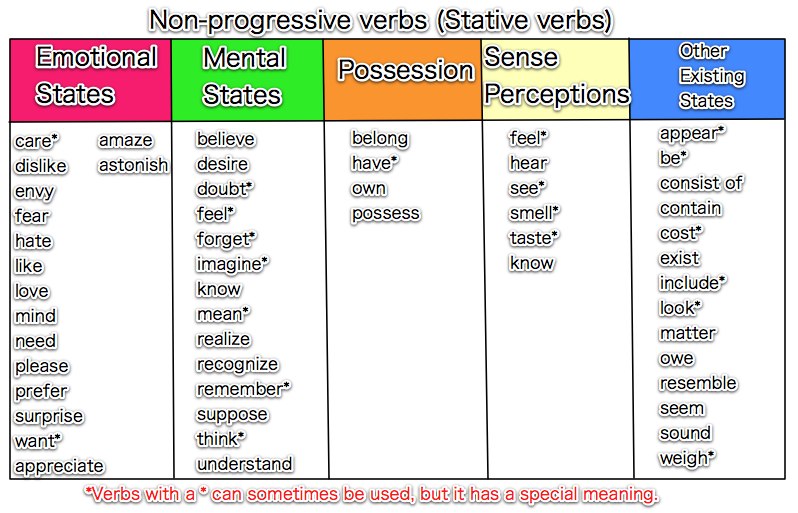
English Site. ANTONIO MARSÁ STATIVE AND DYNAMIC VERBS
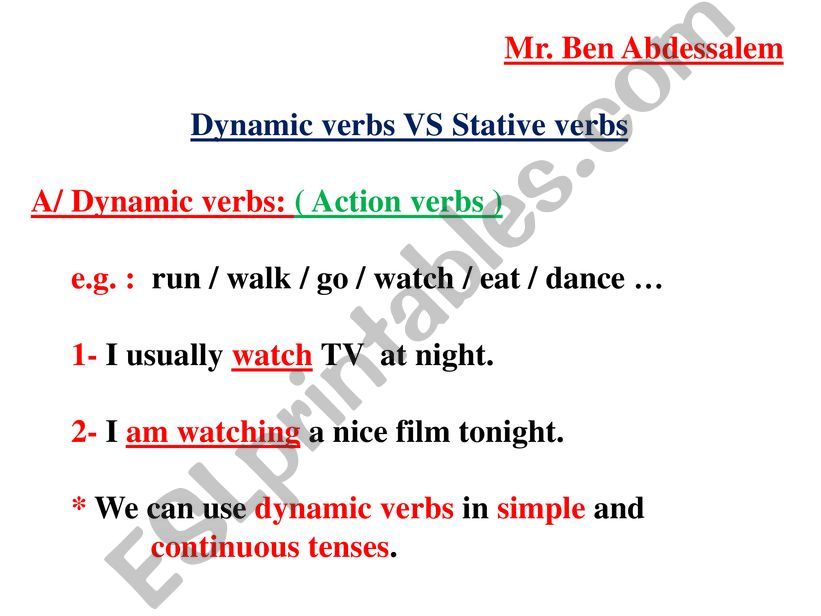
ESL English PowerPoints Dynamic verbs vs stative verbs

DYNAMIC AND STATIVE VERBS YouTube

Stative Verbs or Dynamic Verbs ESL Grammar Worksheet English Grammar For Kids, English Fun

Stative verbs guide usages, examples, types and list
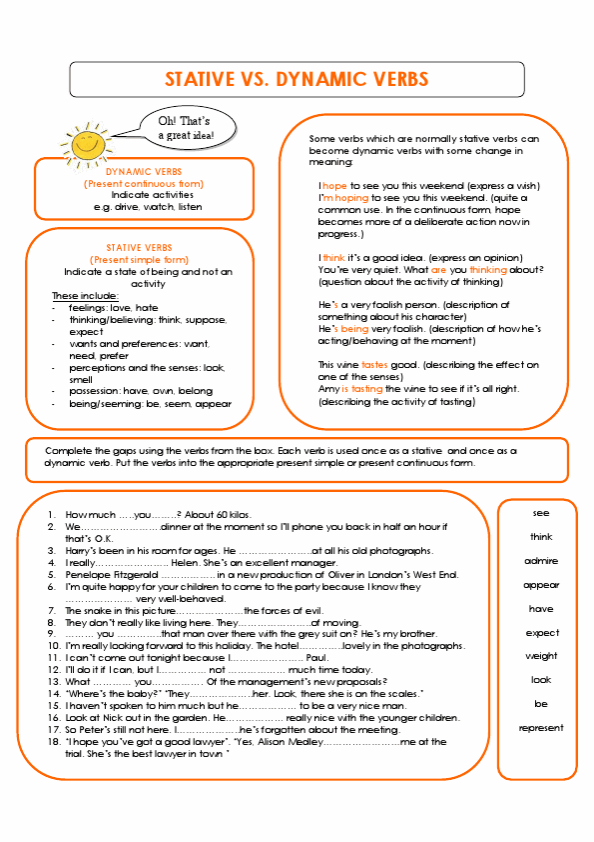
Stative Verbs Exercises, Free Printable Stative Verbs ESL Worksheets EngWorksheets
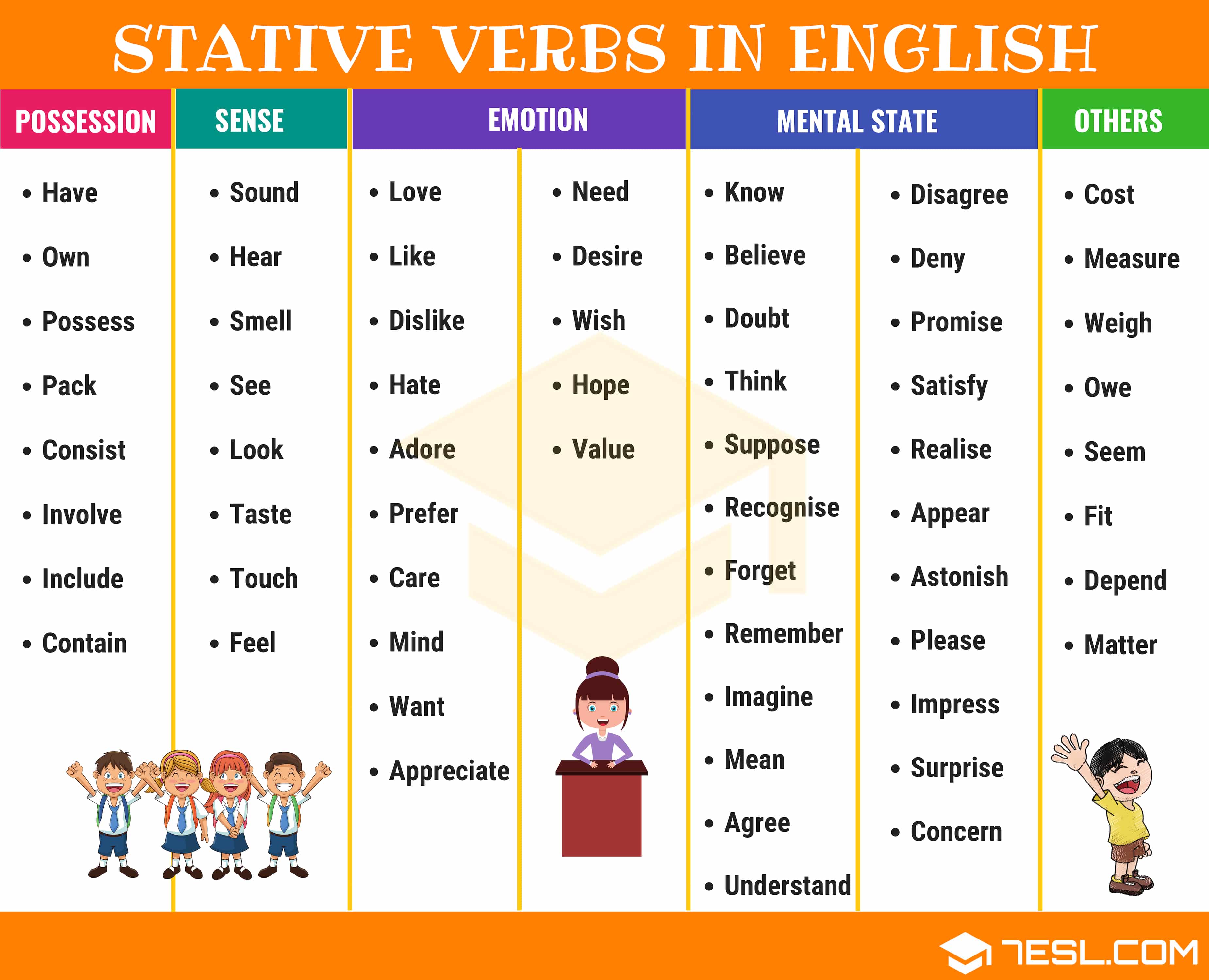
Stative Verb Definition, List and Examples of Stative Verbs • 7ESL

Dynamic Verbs Verbs Can be Both Stative and Dynamic Verbs • 7ESL

Stative Verb dan Dynamic Verb English Café Bali

Verbs with Stative and Dynamic uses

Stative Verbs, Definitions and Examples English Grammar Here

Dynamic and Stative Verbs—Understanding the Difference

Stative and dynamic verbs
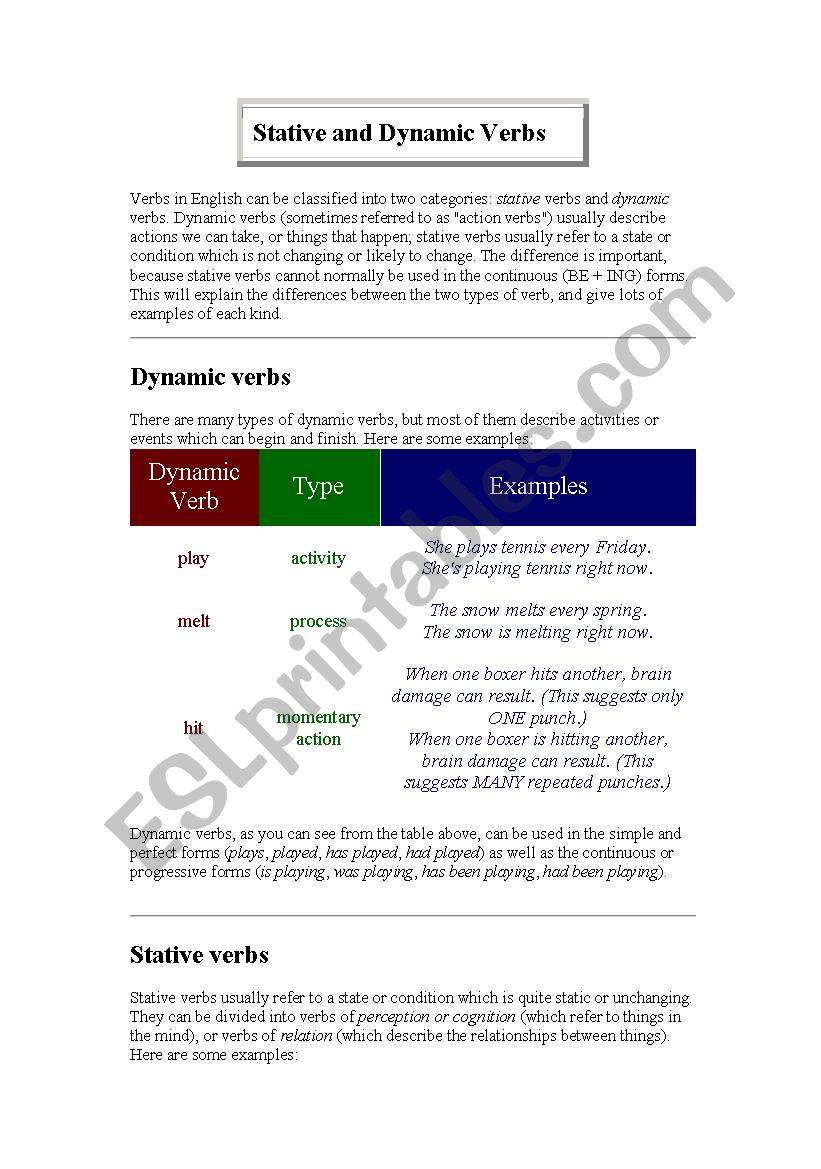
stative and dynamic verbs ESL worksheet by z_bayir

Presentation of stative verbs and verbs with both a stative and a dynamic meaning Illustrated
Dynamic verbs (sometimes referred to as “action verbs”) usually describe actions we can take, or things that happen; stative verbs usually refer to a state or condition which is not changing or likely to change. The difference is important, because stative verbs cannot normally be used in the continuous (BE + ING) forms.. Look at these examples to see how stative verbs are used. I think that’s a good idea. I love this song! That coffee smells good. Do you have a pen? Try this exercise to test your grammar. Grammar test 1. Stative verbs: Grammar test 1. Read the explanation to learn more. Grammar explanation. Stative verbs describe a state rather than an action.

